The machinery may tell the story of steel, but in Chorzów, the voices of former workers reveal what that industrial world actually felt like.
For generations, iron and steel were central to the character of Upper Silesia. They shaped its towns, workplaces and communities, while generations of workers built their lives around the demanding industries that transformed the region.
In Chorzów, that history has found an unusual home.
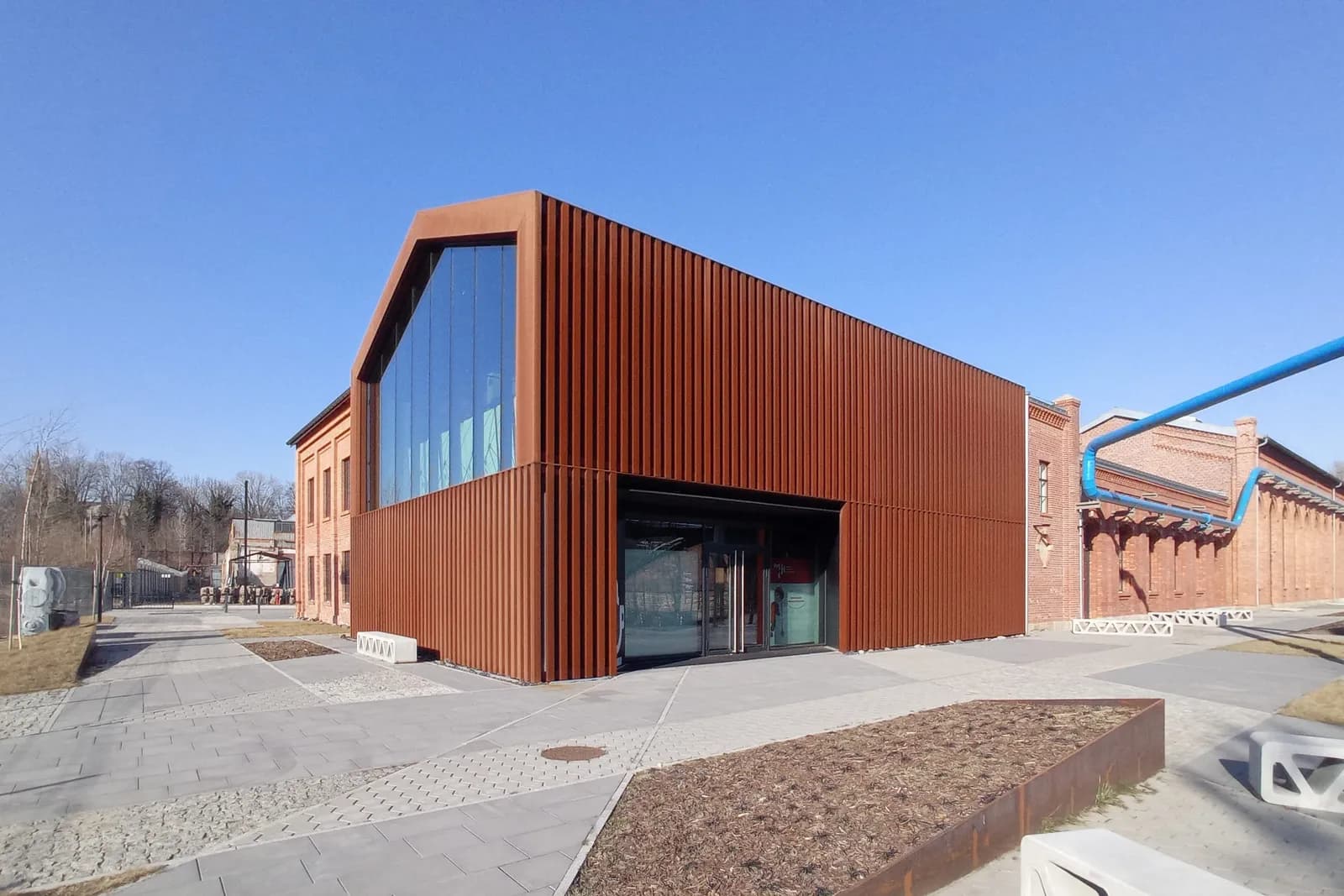
The Museum of Metallurgy occupies a former industrial building connected with the historic Royal Huta, later known as Huta Kościuszko. Rather than separating industrial technology from the people who operated it, the museum brings the two together, combining original machinery with personal memories and testimony.
The result is a museum about engineering, but also about work, identity and the people behind the machines.
A former power station given a new purpose
The building occupied by the museum dates back to 1895, when it served as a power station for the Royal Huta. Its industrial character has therefore been part of Chorzów's landscape for well over a century.
Its story did not end when its original function disappeared.
During the 1970s, the building was used as a technical workshop where workers rewound damaged electric motors. Its practical role continued, even as the surrounding industrial landscape changed.
Eventually, however, the future of the building became uncertain.
In 2010, the City of Chorzów purchased the industrial hall, preventing its demolition and opening the way for its transformation into a museum. The Museum of Metallurgy opened to visitors in November 2021.
That decision gave a surviving piece of the city's industrial architecture a new public purpose. Instead of preserving the building as an empty relic, the museum filled it with the machinery, stories and experiences associated with the industry that once defined the region.
The machinery tells only half the story
The permanent exhibition, Królestwo żelaza or The Kingdom of Iron, is organised around two ideas: the Zone of Life and the Zone of Work.
The distinction is significant.
The Zone of Life explores the world surrounding the industry. It considers the origins of the steelworks, technical education and the choices that led people towards demanding industrial professions. Uniforms and other personal elements help introduce the people behind the occupation.
The Zone of Work then takes visitors into the industrial environment itself.
Here, large original machines recovered from Huta Kościuszko and Huta Batory form the centrepiece. Among the most striking is a Beché hammer, a powerful reminder of the scale and physical force involved in traditional metalworking.
The museum occasionally brings that machinery back to life through live forging demonstrations known as Szychta z kowalem, or "Shift with the Blacksmith".
Such demonstrations add movement and sound to an environment that could otherwise be experienced simply as a collection of historic objects.
Yet some of the museum's most important exhibits cannot be placed behind glass.
The voices that bring the foundry back to life
Through the Mów mi huto, or "Tell Me About the Steelworks"project, former workers become guides to the industrial world they knew.
Instead of relying solely on conventional museum narration, visitors encounter their recorded voices and filmed testimonies. They describe the realities of working in the steel industry, including accidents, extreme heat and the demands of everyday work.
This approach gives the machinery a human context.
A historic industrial machine can demonstrate what technology was capable of achieving. A worker describing the heat, noise or risks associated with that technology provides something different: an understanding of what it meant to stand beside it.
That combination of tangible and intangible heritage is one of the museum's defining characteristics.
The museum also considers younger visitors. Children can follow a separate interactive route guided by Przetopek, an animated character presented as the "good spirit" of the steelworks. Games and interactive activities introduce industrial history in a way designed for younger audiences.
English subtitles on many of the exhibitions, films and oral histories also make the collection more accessible to international visitors.
The Museum of Metallurgy therefore preserves more than the physical remains of an industrial age. Its machines, building and recorded testimonies form different parts of the same story, connecting the technology of steelmaking with the people who lived and worked alongside it.
For Chorzów and Upper Silesia, that distinction matters. Industrial heritage is not simply a collection of old factories and machines. It is also a record of knowledge, skills, routines and memories passed between generations. By bringing those elements together under one roof, the museum ensures that the story of steel remains a human one.
Visitor Information
Museum of Metallurgy in Chorzów
ul. Metalowców 4a, Chorzów
Opening hours
Monday: Closed
Tuesday and Saturday: 10:00–18:00
Wednesday, Thursday and Friday: 09:00–16:00
Sunday: 13:00–18:00
Admission
General ticket: 21PLN
Reduced ticket: 15PLN