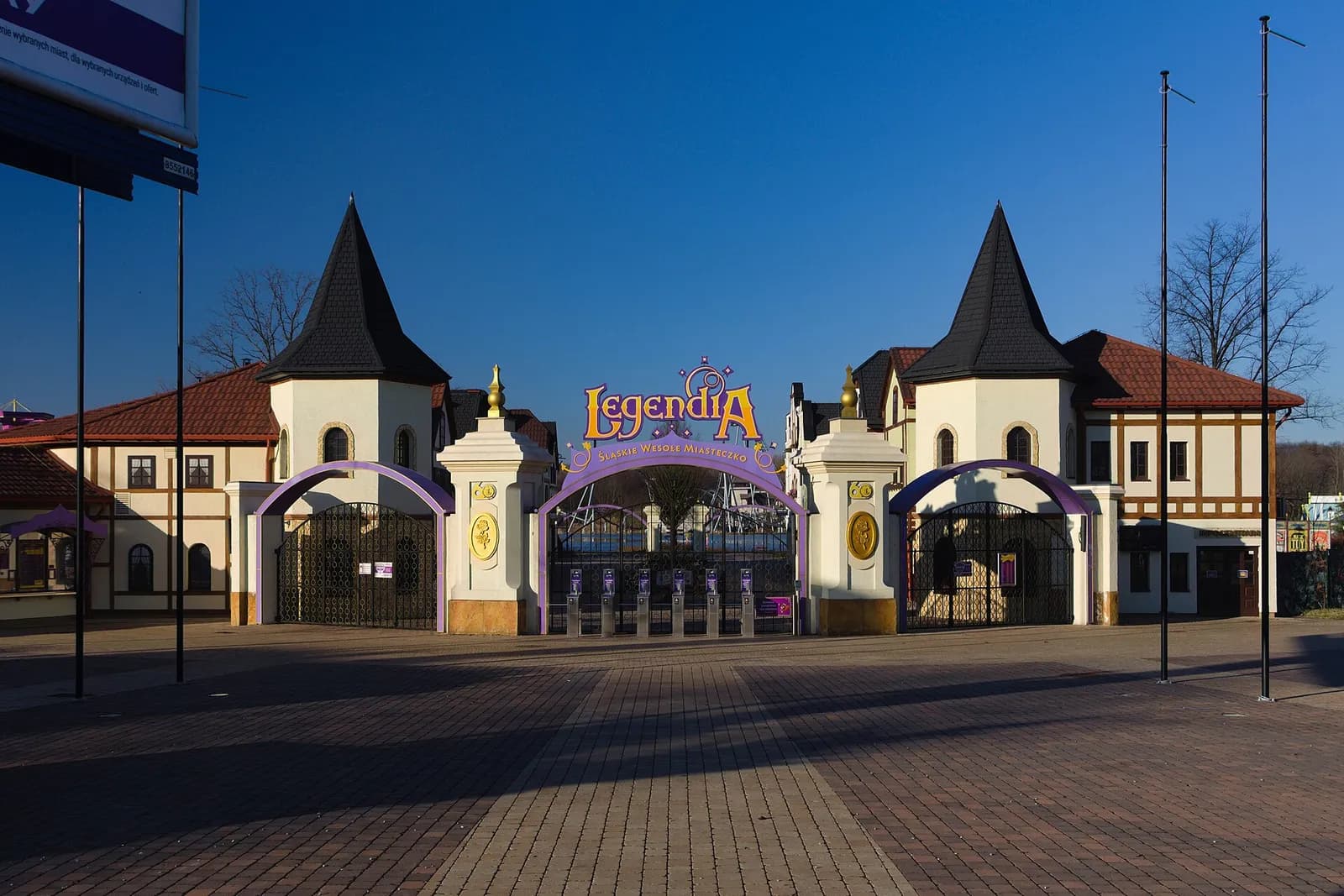
From Wesołe Miasteczko to Legendia
For generations of people in Chorzów and across Upper Silesia, a trip to the amusement park in Park Śląski was simply a trip to Wesołe Miasteczko (Amusement Park).
The name has changed, the rides have changed and the park has been transformed into a modern themed attraction. But the story began in 1959, when Śląskie Wesołe Miasteczko opened its gates to the public.
Today, the park is known as Legendia Śląskie Wesołe Miasteczko, and its history makes it unusual among Poland's major amusement parks. Legendia describes its predecessor as Poland's oldest amusement park, with the first visitors arriving on 12 September 1959.
That makes a visit to Legendia a chance to experience both the modern park and a small piece of Chorzów's post-war history.
A new attraction for post-war Silesia
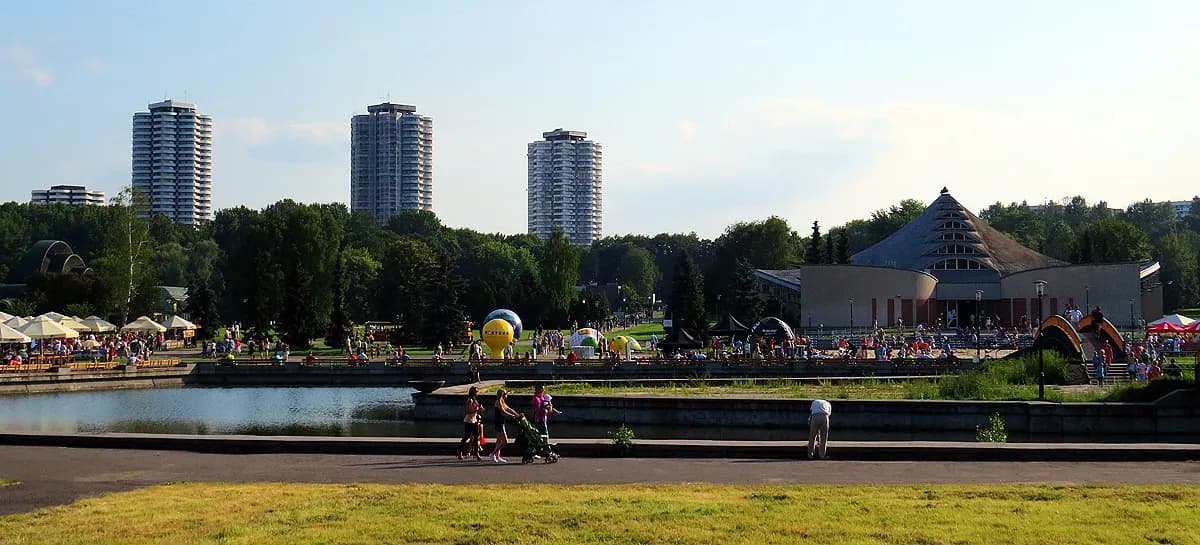
Construction of Śląskie Wesołe Miasteczko began in 1956 as part of the development of the huge recreational complex that became today's Park Śląski.
The idea was ambitious. Industrial Upper Silesia was gaining a major green space where residents could escape the factories, mines and densely built-up urban areas surrounding them.
The amusement park formed part of that vision. When it opened in September 1959, it was already a substantial attraction. By 1960, the park had 63 attractions, and attendance could reach extraordinary levels on major holidays and special occasions.
For local families, it quickly became part of everyday leisure in the region.
The numbers from the early years give an idea of its popularity. Legendia records average weekday attendance of around 6,000 people in 1960, while public holidays could attract approximately 50,000 visitors.
In September 1966, around 80,000 people visited during the Święto Trybuny Robotniczej (Workers’ Tribune Holiday).
The rides that became local landmarks
Some of Legendia's attractions have roots stretching back much further than the current branding suggests.
The Duże Samoloty, or Big Aeroplanes, date from the early years of the park. Suspended from a 45-metre tower, they are among the surviving reminders of the original amusement park.
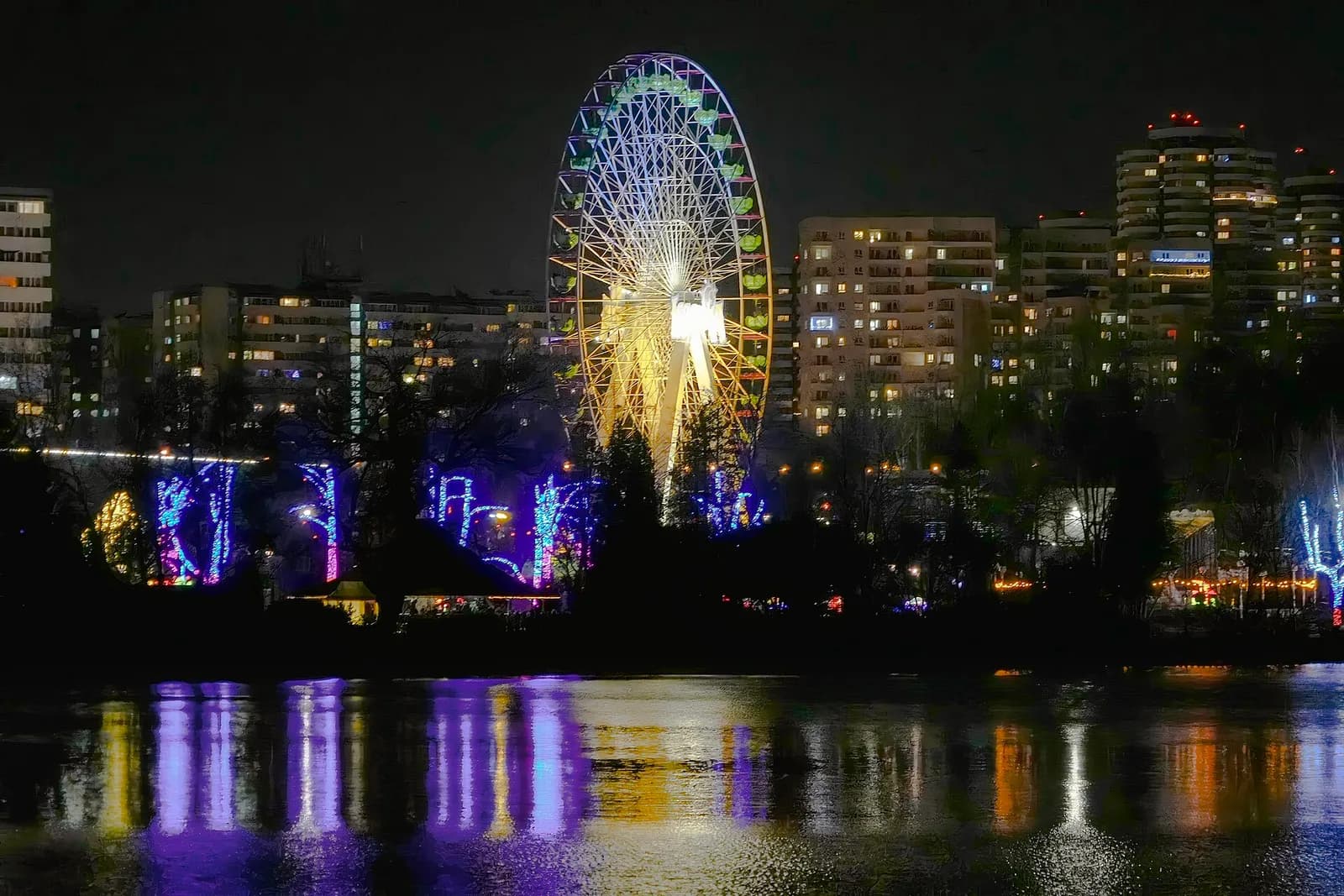
Another familiar sight is Legendia Flower, the Ferris wheel that arrived at the park in 1978. At 40 metres high, it remains one of the most recognisable attractions in the park.
These older rides sit alongside much newer attractions, creating an unusual mixture of different generations of amusement-park design.
It is one of the things that gives Legendia its character.
The park reinvents itself
By the 21st century, the amusement-park market had changed considerably. Visitors were increasingly familiar with large European theme parks, sophisticated roller coasters and heavily themed attractions.
Śląskie Wesołe Miasteczko needed to change with it.
A major step came in 2015, when Slovak company Tatry Mountain Resorts (TMR) became involved in the park and began a substantial investment programme.
The transformation culminated in 2017, when the park adopted the name Legendia Śląskie Wesołe Miasteczko.
The new identity introduced a stronger focus on Polish legends, fairy tales and storytelling, while retaining the historic name within the full title.
It was a significant change, but not a complete break with the past.
Lech Coaster puts Legendia on the map
The most visible symbol of the transformation arrived in 2017.
Lech Coaster opened on 1 July that year, becoming one of the biggest roller coasters in Poland. Its 908-metre track reaches 40 metres in height and speeds of up to 96 km/h.
The ride takes its name from Lech, the legendary founder associated with the traditional story of Poland's origins.
Its arrival marked a new chapter for the park. Instead of simply replacing old rides with newer versions, Legendia was building attractions around stories and themes connected with Poland.
For a park with roots in the late 1950s, it was quite a transformation.
Bazyliszek brings Polish folklore into the park
The approach continued with Bazyliszek, an interactive dark ride that opened in 2018.
Based on the Polish legend of the Basilisk, the attraction takes visitors through a series of scenes where they use interactive equipment to battle creatures along the route.
It is also one of Legendia's internationally recognised attractions, having received a TEA Thea Award, an award from the international themed-entertainment industry.
Bazyliszek is a good example of what makes the modern Legendia different from the traditional lunapark. The attraction is not simply about the ride itself. It uses a story from Polish folklore as the basis for the experience.
Legendia today
Today, Legendia occupies around 26 hectares inside Park Śląski and has more than 40 attractions spread across five themed zones.
The line-up ranges from family and children's rides to major thrill attractions.
Among the headline attractions are:
Lech Coaster
Bazyliszek
Diabelska Pętla
Dragon Temple
Dream Flight Airlines
Legendia Flower
Diamond River
Dolina Jagi
That mixture is important. Legendia isn't built solely around high-speed roller coasters. Younger children and families are also catered to, making it possible for several generations to spend a day in the park together.
And outside the gates is one of Chorzów's biggest advantages: Park Śląski.
A visit to Legendia can easily form part of a wider day spent in the park, surrounded by its extensive green spaces and other attractions.
A familiar place with a different name
For anyone who remembers Śląskie Wesołe Miasteczko, today's Legendia can look remarkably different. The modern theming, new rides and larger roller coasters belong to a different era of amusement parks.
Yet traces of the old park remain.
The name Śląskie Wesołe Miasteczko is still part of Legendia's official identity. Older attractions remain in operation, and the location has not changed. That continuity is perhaps the most interesting part of the story.
A child who visited Wesołe Miasteczko with their parents decades ago can now return with their own children, finding familiar pieces of the park alongside attractions that would have been almost unimaginable when the gates first opened in 1959.
See more: Where Steel Meets Memory: Inside Chorzów’s Museum of Metallurgy
Image credit: Adrian Tync, Wikimedia Commons, CC BY-SA 4.0 / Krzysztof Popławski, Wikimedia Commons, CC BY 4.0