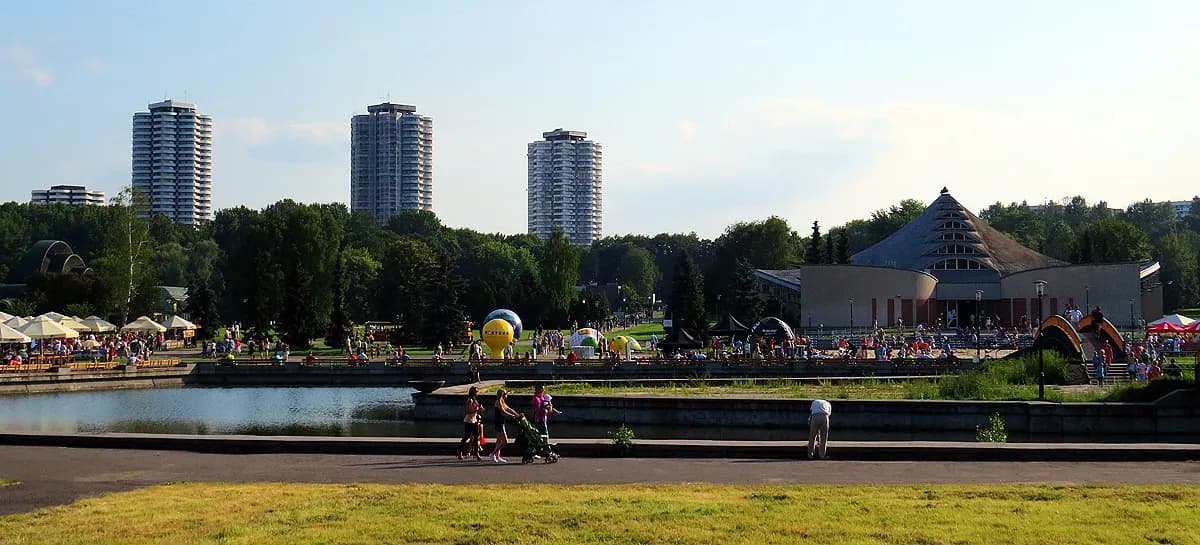
Ask someone to name the world's most famous urban park and the answer will almost certainly be Central Park in New York. Yet tucked between Chorzów, Katowice and the surrounding cities of Upper Silesia is a green space that quietly outscales its American counterpart.
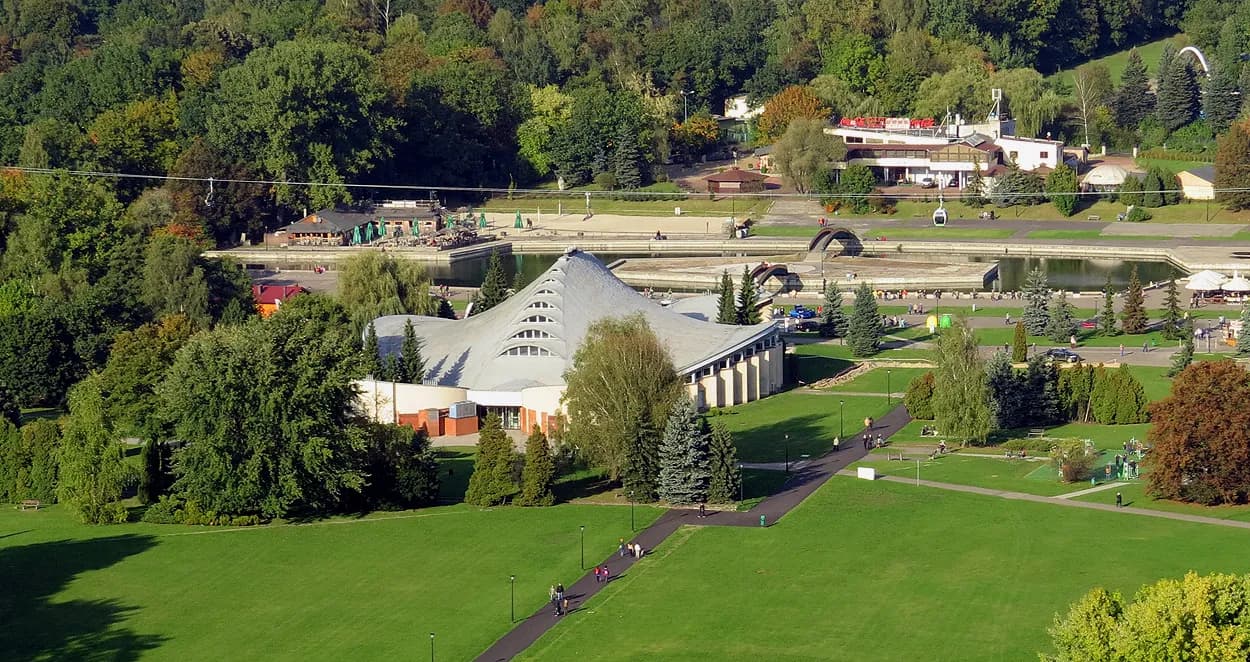
Park Śląski stretches across 535 hectares of landscaped parkland, with the wider recreational complex often measured at around 620 hectares. Either way, it is considerably larger than Central Park's 341 hectares, making it one of the largest urban parks in Europe and, without doubt, one of Poland's greatest public spaces.
For many residents, however, size is only part of the story.
Spend a day wandering beneath its mature trees, watching cyclists glide along peaceful avenues or families enjoying the lakes and gardens, and it becomes difficult to imagine that this landscape was once dominated by spoil heaps, marshland and the scars of heavy industry.
The transformation is one of the most remarkable chapters in Chorzów's modern history.
In the years following the Second World War, planners saw an opportunity to give Upper Silesia something that could be enjoyed for generations. Land that had been shaped by mining and industry was reclaimed on an enormous scale. Millions of cubic metres of soil were brought in, while millions of trees and shrubs were planted to create a park unlike anything Poland had seen before.
More than seventy years later, that ambitious vision continues to define the city.
Rather than serving Chorzów alone, Park Śląski has become the shared garden of the Upper Silesian metropolis, welcoming around three million visitors each year from across the region and beyond. It is a place where locals come for a morning run, an afternoon cycle ride or a quiet walk beneath the trees, while visitors often discover that a single day is barely enough to explore everything it has to offer.
That is because Park Śląski has never been simply a park.
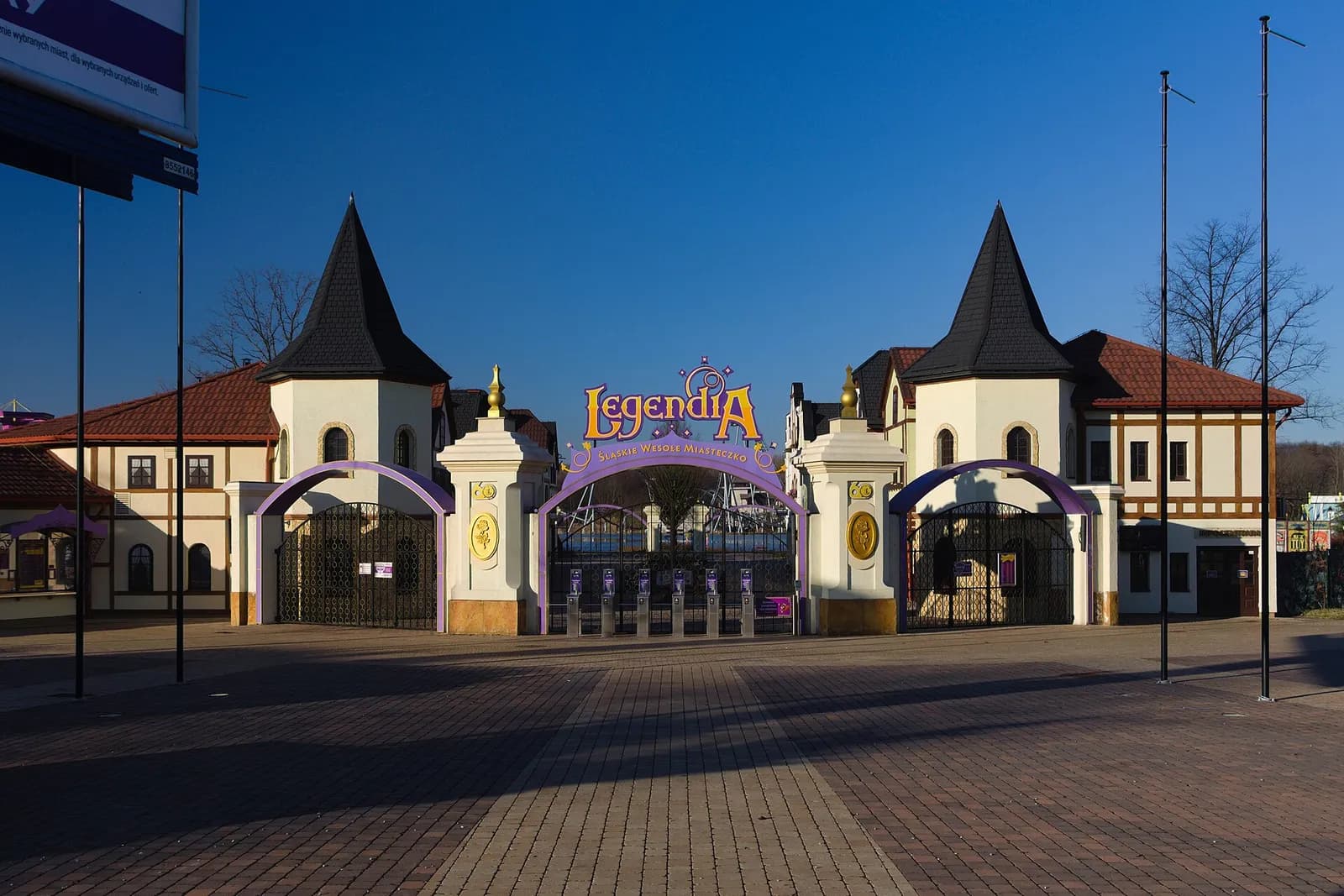
Hidden among its avenues and woodland are some of the region's best-known attractions. The laughter from Legendia, Poland's oldest amusement park, drifts across the trees, while nearby the Silesian Zoo has introduced generations of children to wildlife from around the world. A little further on, the Silesian Planetarium, the oldest and largest of its kind in Poland, continues to inspire visitors to look beyond the skyline, while the Upper Silesian Ethnographic Park preserves the rural heritage that existed long before the surrounding cities grew into an industrial powerhouse.
Towering above much of it all is Stadion Śląski, one of the country's most recognisable sporting venues, its distinctive silhouette reminding visitors that this landscape has long been a stage for national sporting history as well as everyday recreation.
One of the most memorable ways to experience the park is from above. The Elka cableway carries passengers gently across the treetops, revealing just how vast the landscape really is. Looking down from the cabins, it is easy to forget that one of Poland's busiest metropolitan areas lies just beyond the canopy.
During late spring and throughout the summer, many visitors make their way to the Rosarium, where thousands of roses bloom across one of the largest rose gardens in the country. The carefully designed displays have become a favourite backdrop for photographers, couples and families, adding another layer of colour to a park that changes with every season.
Perhaps that is what makes Park Śląski so special.
In a region long associated with coal mines, steelworks and industry, it stands as a reminder that cities can reinvent themselves. What was once a landscape shaped by extraction has become one defined by nature, leisure and community, earning Park Śląski its reputation as the green lungs of Upper Silesia.
Visitors often arrive expecting a pleasant city park. They leave having discovered one of Europe's great urban green spaces and, for many, a side of Chorzów they never expected to find.
image source: Sojomail, CC BY-SA 3.0 / Tomasz Ibrom, CC BY-SA 3.0